(click on a link to jump to that speaker!)
We are excited to be hosting our international keynote speakers:
We also have some great invited speakers:
And we will have a special guest, with a Master Clinician Session:
Uppsala University, Sweden
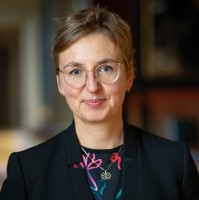
Keynote address - plenary session (60 min)
Just imagine: using mental imagery within CBT
We can think in words and we can think in mental imagery. Both are important for CBT, though historically CBT focuses more on words. Today we will explore why imagery is so interesting too.
Mental imagery has a more powerful impact on emotion than thinking in words. Mental imagery allows us to time travel, having a powerful impact on our emotions, motivation and behaviour. Intrusive image-based memories can “flash backwards” to past trauma. Mental imagery can "flash forwards" to the future, such as in suicidal thinking or goals in hypomania. Although images can seem fleeting and elusive, our research methods to investigate imagery are advancing and can offer insights to improve interventions.
More from Emily.
return to top
MRC Cognition and Brain Sciences Unit, University of Cambridge, United Kingdom
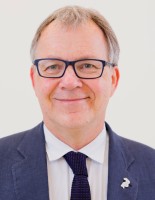
Keynote address - plenary session (60 min)
Shattered lives: understanding and treating posttraumatic stress in children and adolescents
Around two thirds of children and adolescents will have experienced profoundly traumatic events before they turn 16. A significant proportion of those exposed to these experiences will suffer mental health problems, most notably posttraumatic stress disorder (PTSD). Over the past 25 years myself and my collaborators have sought to understand the nature of PTSD in young people and the factors that contribute to its onset, maintenance and remission. These insights have provided a platform for translational research developing and refining psychological interventions for this disabling condition, for children as young as three years right up to older adolescents. This talk reviews this translational journey from the laboratory to the clinic through to implementation, including recent work developing and evaluating e-therapy interventions. The talk is ostensibly about a research programme on PTSD, but it also serves to illustrate the challenges and opportunities of clinical translational research in any domain of mental health.
More from Tim.
return to top
UNSW - Sydney
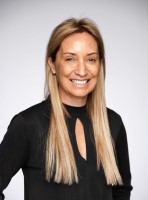
Plenary address (45 min)
Get in the back seat, I am driving. Translating research into action.
Singular interventions that focus on quantifying Indigenous Australians Mental health & inequalities, as opposed to addressing the inequities that cause them, is a key & much needed paradigm shift to closing the gap in mental health. By developing a program of research that scaffolds and complements the other will provide a more holistic shift in the way Indigenous mental health research is approached. To address this significant national issue, this research program will establish innovative and culturally appropriate approaches that engage Indigenous communities, particularly Indigenous youth and health professionals in co-design and self-determination, to ensure successful translation of research findings into the community setting that lead to improvements to the mental health of young Indigenous Australians.
More from Maree.
return to top
Associate Professor Melissa Day
University of Queensland
Plenary address (45 min)
Chronic pain: we can do better
Which treatment, delivered by whom, for which client, is most effective under what circumstances? These questions have been asked for over five decades; let’s discuss why the answers remain elusive.
Psychological interventions for chronic pain that are based on cognitive, mindfulness, acceptance, and behavioural principles have been shown to reduce pain intensity and improve mood and function. However, effect sizes tend to be modest on average, with a great deal of individual variability in response to treatment. In an effort to boost these effect sizes, the past several decades have seen an increased interest in examining the mechanisms of such treatments. That is, determining how (mediators) and for whom (moderators) meaningful treatment-related change is engendered.
More from Melissa.
return to top
Schema Therapy Sydney
Plenary session (45 min)
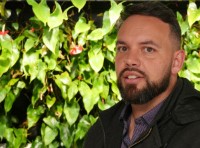
Advances in the practice of schema therapy in 2024 and beyond: trends, opportunities, and challenges
The evolution of Schema Therapy has to some degree trodden a familiar, insular path, known mainly by those within the ‘schema therapy community’. There are signs however that the influence of Schema Therapy is becoming more far reaching. There is acknowledgment that the Schema Therapy model, whilst influential currently, must become more connected to the wider clinical science if it is to survive as a serious evidence-based therapy model.
In this presentation Rob will outline some of the recent trends in schema therapy practice and research, and outline how Schema Therapy based research is influencing clinical practice and research more broadly.
More from Rob.
return to top
Benchmark Psychology
Plenary session (45 min)
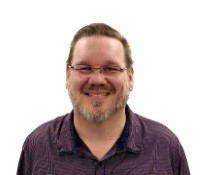
Deliberate practice - the pathway to ongoing improvement in a changing landscape
Are you a better therapist today than you were at the start of your career?
While it depends on how you define “better”, the null hypothesis seems to be holding. The largest studies that have tracked the effectiveness of psychologists over the course of their career have consistently failed to show evidence of improvement, with one of the largest studies actually finding significant decline. Despite the evidence being clear for decades that therapy type contributes only a small amount to the overall change process, each year clinicians invest thousands of dollars and hundreds of hours into learning the “latest” in therapy innovation.
Deliberate practice takes a different approach, rather than learning a new technique. The goal is to learn how to use what you already know more effectively. Early research on deliberate practice shows slow but sustained improvement in therapy outcomes. This session will cover the theoretical basics, while also giving some practical tools to get started.
Aaron is an experienced and engaging speaker and has many insights to share, especially in relation to private and clinical practice.
More from Aaron.
return to top
Sydney University
Master Clinician Session (90 min)
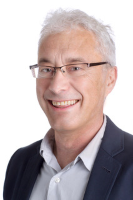
Beyond the manual; fundamental ideas and strategies for working with families and child mental health
You’ve all read the manuals on how to deliver parenting support for child conduct problems. Now get the inside story; how to make these interventions work in the real world.
This will be a practical session in which Professor Mark Dadds shares ideas and strategies for full engaging families into mental health interventions for young children, and empowering them to change by combining the best of our science with their individual needs. The session will involve a combination of theory, case examples, role plays, and practical demonstrations of skills.
More from Mark.
return to top
